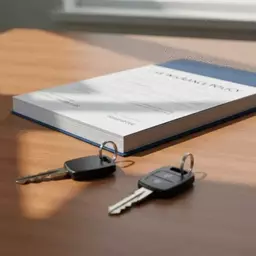
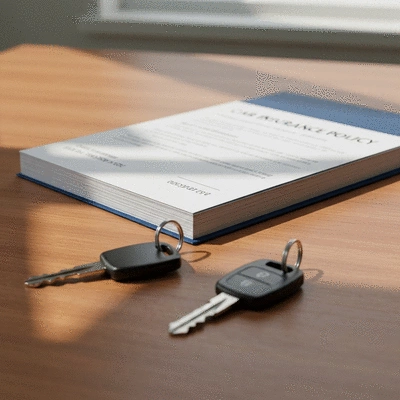
Car keys after a crash can be lost, bent, locked inside the vehicle or still sitting in the wreck. None of these problems stops you from getting your car back. You prove you own it, agree the release with the yard, and arrange a replacement key if the original cannot be used.
Start with the facts. Note where the keys were last seen and who has touched the car since the impact. Photograph the vehicle and the scene before anything moves. Then contact your insurer and the yard. The sections below cover each step in order.
Why do car keys go missing after a crash?
Keys disappear for ordinary reasons. The impact throws loose items around the cabin. A key on the seat or centre console can slide under a seat, into a footwell or into a gap behind crushed trim. A key left in the ignition can snap or bend if the steering column shifts. A keyless fob sits in a pocket or bag, and the driver may leave the scene without either.
The response adds more cases. Paramedics may take a driver's belongings with them. A passenger may pocket the keys to keep them safe. A tow operator may take the keys along with the car, or the keys may stay inside a locked cabin.
Damage causes the rest. A key can survive but stop working. A cracked fob case can break the battery contact or the circuit board. A bent blade will not turn the lock. A smart key can open the doors yet fail to start the engine if the cabin antenna or the wiring is damaged.
Each cause needs a different fix. Identify yours first:
- Lost: the key is somewhere you cannot reach or have not found.
- Damaged: you hold the key, but it will not open, turn or start the car.
- Locked inside: the key is in the cabin and the doors are shut.
- Inside the wreck: the key is in a vehicle that has already been towed.
What should you do at the roadside if the keys are missing?
Safety comes first. Do not search a damaged car on a live road. If anyone is hurt, call emergency services and let them lead. The keys can wait.
Once the scene is safe, look in the obvious places once. Check your pockets, the ignition, the seats and the footwells. A tow operator can move a car without keys, although the method may be slower or add cost, so tell the driver the keys are missing before the lift begins.
In Victoria, you or the driver signs an authority to tow before an accident tow takes place. Read it before you sign. Check that the destination and the operator's details are complete, and ask for a copy. The operator must also explain your right to choose where the vehicle goes. If you cannot decide at the scene, a safe, nearby location can give you time without a long storage clock running.
Write down the details while you are still there:
- The tow operator's name and company.
- The truck's number plate and the job number, if one is given.
- The address of the yard or repairer receiving the car.
- Whether the keys went with the car, stayed inside, or are missing.
If an ambulance takes you away, ask a trusted person to collect this information. Give them your registration details and your insurer's claim number if you already have one.
What will a tow yard need before it releases your car?
Every yard sets its own counter process, so call before you travel. Most ask for the same core items. Gather them in a folder before you phone.
- Proof of ownership: a current registration certificate, or purchase and transfer paperwork if the car is not yet in your name.
- Photo identification: a driver's licence is the usual choice.
- Written authority: a signed letter from the owner if someone else collects the car, plus that person's identification.
- Payment: the towing and storage charges, in the form the yard accepts.
- Insurer instructions: a claim number and the repairer's details if your insurer is moving the car for you.
The fee category matters. The Essential Services Commission reports that accident towing and storage charges are the only regulated towing fees in Victoria, while clearway, impound and breakdown tows are priced by the operator. Ask the yard which category applies to your car. Request an itemised invoice that lists the tow, any after-hours charge and the daily storage rate.
Police-ordered impounds follow a stricter process. Victoria Police asks for 100 points of identification to collect an impounded vehicle or the property inside it. That page covers vehicles impounded for offences, not ordinary crash tows. It still shows how formal a release can be, and it explains the extra proof needed when a car is not registered in your name.
Missing keys do not usually stop a release. They stop the drive. Ask the yard these questions:
- Will it release the car onto a flatbed or another tow truck that you send?
- Does it allow a locksmith or technician to work on site?
- What are its opening hours for collection and for onsite work?
- How many days of storage have built up, and at what daily rate?
Storage charges accumulate daily, so a slow decision has a cost.
Who can collect the car if you are injured or away?
You can send someone else, but the yard will want proof that you agreed. A signed letter that names the person, the vehicle, the registration number and the date helps. Add a copy of your licence and your registration papers. The person collecting should carry their own photo identification.
Some yards ask for the owner to phone and confirm the release. Others need the original authority to tow. Ask which they require before anyone makes the trip.
If you are the driver but not the owner, contact the registered owner at once. A company car, a lease or a family vehicle all carry the same issue. The yard will deal with the owner, or with a person the owner has clearly authorised in writing.
What if the keys are still inside the wreck?
Keys left in a towed car are often safe, but you need proof of where they are. Ask the yard to confirm in writing or by message that it has seen them. Ask who holds them and where they are stored.
Do not break a window or force a door to reach them. That damage may complicate the insurance claim and can cause injury. If the cabin is locked and the keys are inside, ask the yard how it normally gives owners access to the cabin. Some yards supervise personal property collection, so book a time and bring identification.
When you open the car, photograph the cabin before you touch anything. Photograph the keys where they sit. Then photograph them again as you remove them. Check each key for damage, and test the buttons if the fob has any.
If the yard cannot find keys that were inside the car, record the conversation with the date, the staff member's name and what they said. Send a short written message that states what was in the car and when you last saw it. Keep the message factual. Consumer Affairs Victoria deals with complaints about trading practices, including disputes over towing charges, and the yard's response may decide whether you take that step. Seek separate legal advice if the loss is significant.
Should you tell your insurer, and what might key cover include?
Yes. Tell your insurer early, ideally before you sign anything that sends the car to a particular yard or repairer. Many insurers arrange the tow, move the car to an assessor or repairer and manage the paperwork. They can only do that if they know where the vehicle is. Our guide to filing car insurance claims in Melbourne covers the claim process in more detail.
This section is general information only. Policies differ, so check yours. Keys sit in three common positions:
- Included: some policies treat a damaged key as part of the loss to the car and handle it inside the claim.
- Optional extra: some insurers offer lost or stolen key cover as an add-on that you must have bought before the crash.
- Not covered: some policies exclude keys unless an insured event directly damaged them.
The cause can change the answer. A key snapped in the ignition during the impact is different from a key left behind at home. Ask your insurer which situation applies to you.
Excess and limits also matter. If the replacement costs less than your excess, a separate key claim may not pay anything. Some policies cap key cover at a set amount. Others cover the key but not the labour to reprogram the immobiliser.
Before you book any replacement work, ask your insurer these questions:
- Does my policy cover key replacement after an accident?
- Do I need your approval before I book a locksmith or dealer?
- Which documents do you need, such as quotes, invoices or photos?
- Will you pay the supplier directly, or will I be reimbursed?
Keep every answer in writing. If your insurer arranges the tow and the repair, ask who is responsible for the keys while the car is in the repairer's care. A repairer may also need a working key to move the car, so the problem can surface again later.
How do you replace car keys after a crash?
You have two main routes: the vehicle dealer and a mobile automotive locksmith. Each can suit different cars and different situations.
A dealer can order a key that matches the vehicle identification number. Dealers usually ask for proof of ownership, photo identification and the vehicle's details. Some makes need the car to be present so the dealer can program the new key. That may mean a tow, which adds cost and storage time. Ordering parts can also take longer than a same-week job.
A mobile locksmith comes to the car. Many can cut a blade, program a transponder key and add a spare on site, depending on the make and the model year. They still verify ownership first, and they need access to the car's diagnostic port and a working battery. Drivers in Melbourne's inner south can ask a car locksmith St Kilda operator about on-site key cutting and programming once ownership is confirmed and the yard allows the work.
Whichever route you pick, ask the same questions:
- Does the supplier handle my make, model and year?
- What proof of ownership will it require?
- Can it work inside the yard, or must the car move first?
- What is the quote, in writing, for the key, the programming and any call-out?
- Will it remove the old keys from the immobiliser memory?
That last question matters. An immobiliser is the anti-theft system that prevents the engine from starting unless it recognises a coded key. A new key must be registered with the car. If a lost key could be found by someone else, ask the supplier whether the old key can be erased from the system, so only the new keys start the engine.
Do not pay for work you cannot see in a written quote. Ask for a receipt that lists the vehicle, the date and the work performed. Keep it with your claim papers.
What if the car cannot be moved or started?
A crash can leave a car that will not start for reasons unrelated to the key. The battery may be flat or disconnected. The steering may be locked in position. Crushed wiring may cut power to the immobiliser. An electronic parking brake may hold the wheels.
Programming a key needs power and a working data connection. A locksmith or dealer may be unable to finish the job until a repairer fixes the damage. The delay is a sequence problem, not a key problem.
Here is a hypothetical example. A driver's rear-end crash leaves a smart key cracked and the battery flat. The yard allows collection but not repairs on site. The driver arranges a flatbed to a repairer, the repairer restores power, and the key is programmed after that. If the driver had booked the key work first, the visit would have been wasted.
Plan the order of tasks:
- Confirm the car's location and the storage rate.
- Decide whether to move the car before replacing the key.
- Check with your insurer which repairer or assessor will see it.
- Book key work only when the car is ready for it.
What should you photograph and record?
Evidence protects you in three ways. It supports an insurance claim, it clarifies who held the keys, and it helps you challenge an incorrect charge. Build a simple record from the first hour.
Photograph and note:
- The scene, the car's position and the damage, before the tow.
- The ignition and the cabin, showing where the keys were.
- The tow authority, including the destination and fees.
- The yard entrance, the address and the vehicle's position in the yard.
- Each key, front and back, with any visible damage.
- The odometer reading and the warning lights, if the car powers up.
Add written notes for dates, times and names. Log every phone call with its date and time. Save every message and invoice in one place. Our post-crash vehicle record folder guide shows one way to keep these papers together.
If the original keys later turn up, test them before you rely on them. The key check after a minor accident guide explains how to check that the key, the ignition and the door locks still work. A key that appears fine can still fail in a damaged lock.
Keep old keys in a safe place until your insurer finishes the claim. Do not throw away a damaged key. The insurer may want to see it.
Conclusion
Missing or damaged keys add steps to a crash, but they follow a clear order. Confirm who holds the keys, establish ownership, agree the release with the yard and tell the insurer. Choose a replacement route that matches the car, the damage and the yard's rules. Written records and photographs keep every decision traceable from the roadside to the final invoice.